As growth across the Southwest accelerates, the question guiding today’s most successful communities is simple: how can what we plan today continue to thrive decades from now?
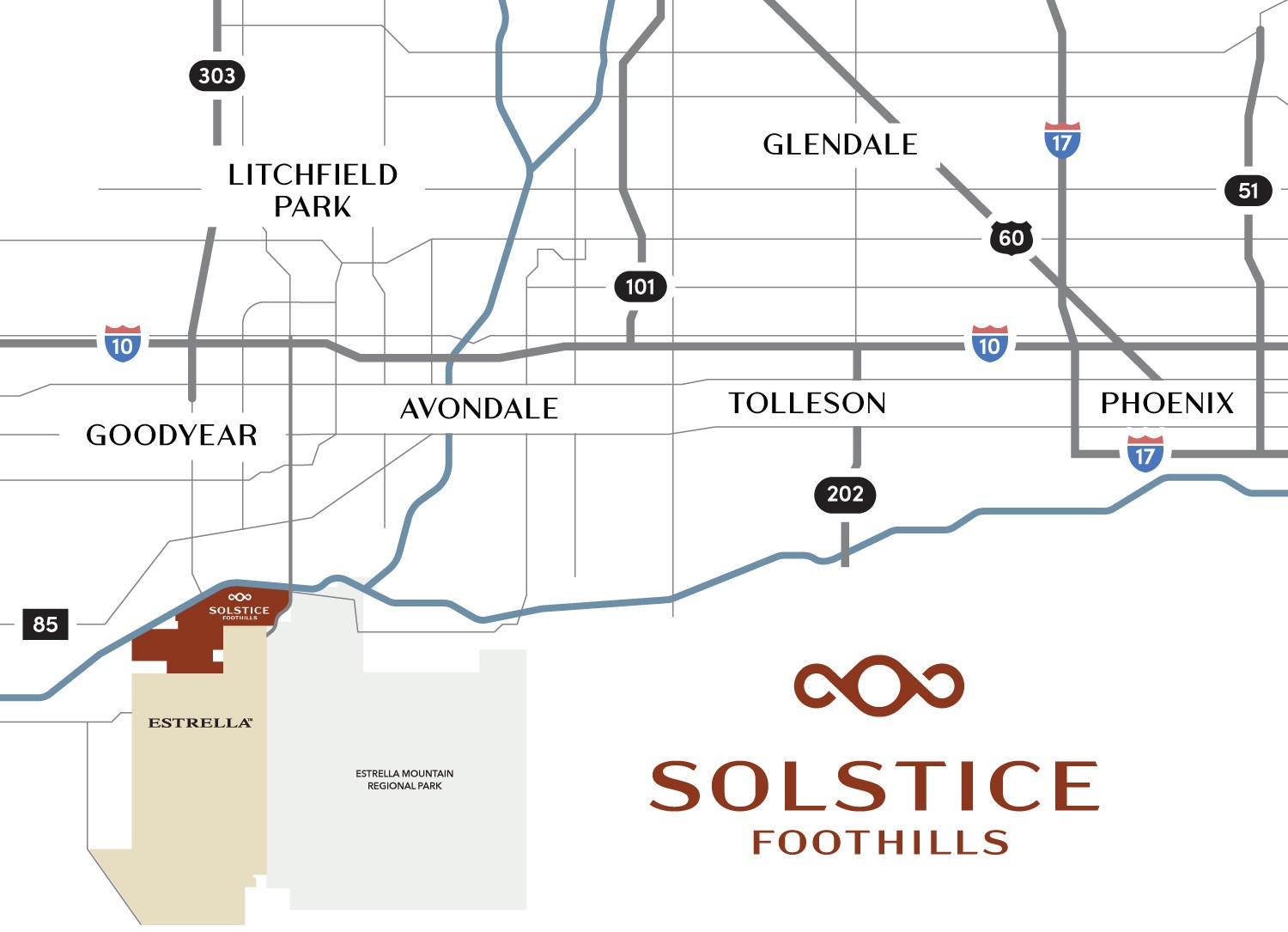
This question sits at the heart of Harvard Investments’ core mandate. To explore it, the firm engaged with RVi Planning + Landscape Architecture, the planning group helping envision Solstice Foothills, Harvard Investments’ new, 1,940-acre master-planned community in Goodyear, Arizona.
Together, the teams began shaping an approach that balances long-term resilience with the realities of a dynamic and evolving market.
Mark Reddie, Southwest Regional Vice President at RVi, believes the answer lies in evolving beyond traditional entitlement strategies and embracing flexibility grounded in strong design principles. At Solstice Foothills, this philosophy shaped every step of the process.
Harvard Investments’ leadership was instrumental in refining this balanced vision. As Amy Weidman, Vice President of Development noted, the goal was to create a framework that could adapt over time while maintaining a cohesive identity and enduring value.
Working alongside RVi Principal Chris Baker, the RVi team approached entitlement not as a one-time regulatory milestone, but as a long-term framework designed to adapt to changing market conditions, infrastructure needs, and community expectations.
Rather than relying on rigid, conventional zoning, Solstice Foothills uses a Land Use Character Area (LUCA) framework. This approach prioritizes character, compatibility, and function over fixed land-use categories, allowing the community to evolve over time while maintaining a cohesive vision. The result is a plan that balances flexibility with predictability and ensures resilience without sacrificing identity.
This flexibility is supported by clear guardrails. Thoughtful standards for open space connectivity, trail systems, design quality, and neighborhood transitions create confidence for both the City of Goodyear and surrounding residents. Through meaningful community engagement, concerns about compatibility and character were addressed with targeted solutions, reinforcing trust and strengthening the plan.
Solstice Foothills demonstrates that the future of master-planned communities lies in integrated, flexible entitlement strategies; ones that align planning, infrastructure, and community input from the outset to deliver enduring value and a strong sense of place.
This blog summarizes an article that appeared in the May 2026 edition of RVi Voice. Reprinted with permission of the author, Mark Reddie.
Read the complete article here: https://www.rviplanning.com/blog/flexible-zoning-and-entitlement-strategies-how-to-create-opportunities-for-master-planned-communities-to-adapt-and-evolve-over-time/